

AGI & research
Artificial general intelligence, the ARC-AGI benchmark, research papers and how AI systems reason.

6 articles
-

Program synthesis: Ndea's path toward AGI
Program synthesis searches for executable rules from constraints or examples. Learn how it works and why Ndea sees it as a possible path toward general AI.
-

How We Get To AGI: key ideas from François Chollet’s talk
Why scaling alone fell short, what ARC-AGI measures, and why François Chollet proposes combining learned intuition with program search to build adaptable AI.
-

Do LLMs really reason?
LLMs can solve some problems step by step, but their reasoning remains fragile. Learn what the evidence shows, where they fall short, and how to assess answers.
-

On the Measure of Intelligence, explained
Measuring AI intelligence takes more than a benchmark score. Explore Chollet's framework for understanding how systems learn new skills and where they fall short.
-
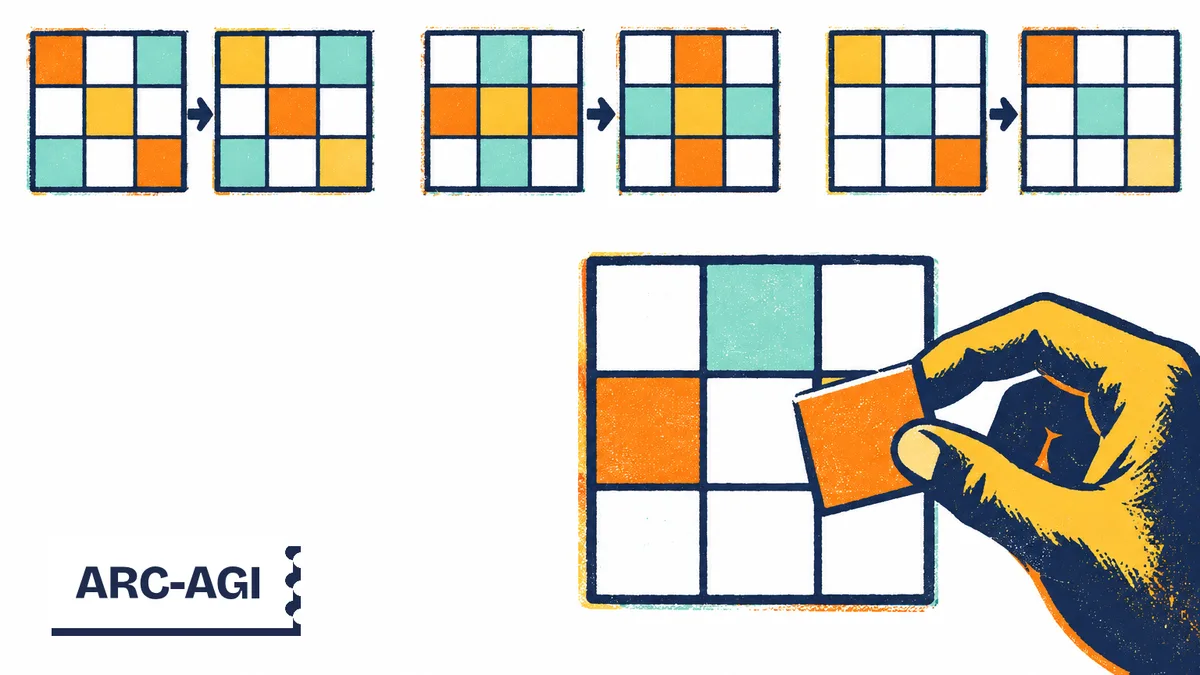
ARC-AGI explained: the test of AI intelligence
ARC-AGI tests how AI systems solve unfamiliar problems. Learn how its grids and editions work, and what benchmark scores can—and cannot—tell you about AI.
-

What is AGI? Definition, measurement, and research
AGI describes AI that can learn and solve a wide range of problems. Understand its definitions, how it is tested, and the limits of published research results.